
How to Paint High Foyers and Vaulted Ceilings Safely
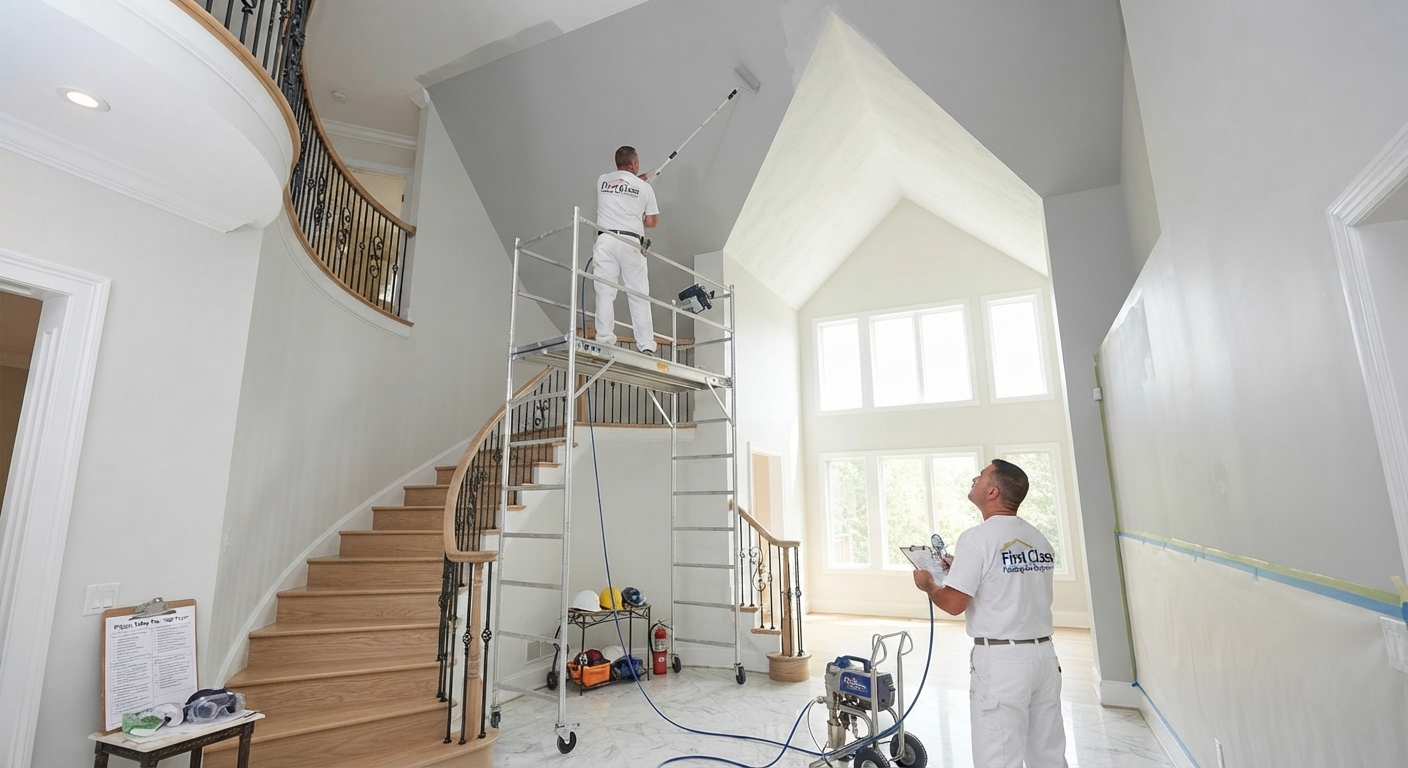
Two-story foyers and vaulted ceilings are some of the most striking architectural features in DMV homes, and also some of the most intimidating spaces to repaint. The same height that makes these rooms feel grand is exactly what makes them dangerous and difficult to paint well without the right equipment and technique. If you’re trying to figure out how to paint high foyers vaulted ceilings without hiring it out, it’s worth understanding what the job actually involves before you start.
At First Class Painting and Carpentry, we’ve handled two-story foyers and vaulted ceilings across Potomac and the greater DMV area for decades, and this is consistently one of the projects where the gap between a DIY attempt and a professional result is the widest.
Why These Spaces Are Different From a Standard Room
Painting a standard 8 or 9-foot ceiling is manageable with a stepladder and a roller extension pole. A two-story foyer or vaulted ceiling changes the equation entirely:
- Height often exceeds 16 to 20 feet, well beyond what a standard extension pole or household ladder can safely reach.
- Angled or sloped surfaces, common in vaulted ceilings, require adjusted rolling technique to avoid uneven paint buildup at the peak versus the lower edges.
- Access is often limited, with stairwells, railings, and open-concept layouts that make traditional scaffolding or ladder placement difficult or unsafe.
- A single mistake is costly, since redoing a section 18 feet up isn’t as simple as touching up a wall at eye level.
These factors are exactly why learning how to paint high foyers vaulted ceilings safely starts with equipment and access planning, not paint selection.
Safe Access Methods for High Ceilings
Professional painters typically rely on one or a combination of these approaches, depending on the specific space:
- Multi-section extension ladders, used with proper stabilizers and always with a second person present for safety, suited to more accessible wall sections.
- Scaffolding systems, which provide a stable, walkable platform for extended work at height and are often the safer choice for large vaulted areas or extended painting sessions.
- Articulating or extension poles with specialized ceiling rollers, useful for reaching moderate heights from a stable lower platform without needing to work directly at the ceiling level.
- Boom lifts or scissor lifts, reserved for the most extreme heights or foyers where scaffolding isn’t practical due to layout or access constraints.
Attempting to paint high foyers vaulted ceilings using an undersized ladder, or by leaning and stretching to reach difficult angles, is one of the most common causes of both injury and a visibly uneven finish.
Technique Matters as Much as Access
Once safe access is in place, the painting technique itself needs to account for the unique geometry of these spaces:
- Work in manageable sections rather than trying to roll the entire vault or wall in one continuous pass, which helps maintain a wet edge and avoid visible lap marks.
- Adjust roller pressure on angled surfaces, since sloped vaulted ceilings can cause paint to pool or run if applied too heavily, especially near the peak.
- Account for changing light conditions throughout the day, since large windows common in foyers can dramatically shift how color and sheen appear from different vantage points.
- Plan cut lines carefully at every angle change, including where a vaulted ceiling meets a flat wall or where multiple roof pitches intersect, since these transitions are highly visible from the floor below.
Getting the technique right on how to paint high foyers vaulted ceilings is as much about patience and sequencing as it is about the paint itself.
Color and Lighting Considerations Specific to These Spaces
Foyers and vaulted rooms often have unusual light sources, including skylights, high clerestory windows, or chandeliers hung from significant heights, all of which affect how paint color reads:
- Test samples at multiple heights, not just at eye level, since color can appear noticeably different 15 feet up under different light angles than it does on a sample board at arm’s length.
- Consider how the color transitions to adjoining rooms, since an open foyer often flows visually into a living room, staircase, or hallway, and mismatched transitions are more noticeable in open-concept layouts.
- Account for chandelier and fixture placement, since shadows cast by large light fixtures can create visible variation in how a single color appears across the ceiling.
Why This Is One of the Riskiest DIY Projects in a Home
Beyond the technical painting considerations, the safety math on high foyers and vaulted ceilings is different from almost any other interior painting project. Falls from height are among the most common and most serious home DIY injuries, and the combination of extended reach, awkward angles, and prolonged time spent at height significantly raises the risk compared to standard wall or ceiling work.
This is the main reason most homeowners who ask how to paint high foyers vaulted ceilings themselves ultimately decide the safety and equipment requirements make professional help the more practical choice, even for otherwise experienced DIYers.
Frequently Asked Questions
What height ceiling actually requires special equipment? Anything beyond what a standard 6 to 8-foot stepladder and extension pole can safely and comfortably reach, generally ceilings above 10 to 12 feet, starts to require scaffolding, taller ladder systems, or lift equipment for safe, even coverage.
Can I use a regular extension pole for a vaulted ceiling? For moderate heights and flat sections, yes, but vaulted and angled surfaces are difficult to coat evenly from a distant, awkward angle, and very high peaks typically require scaffolding or a lift regardless of pole length.
How long does painting a two-story foyer typically take? Depending on square footage, ceiling height, and access complexity, a professional crew typically completes a two-story foyer in one to three days, including proper setup, prep, and safe teardown of scaffolding or lift equipment.
Is it more expensive to paint a vaulted ceiling than a standard one? Generally, yes, due to the additional equipment, time, and safety precautions required. The cost difference reflects the access challenges of the space rather than the paint itself.
Let Us Handle the Height and Complexity
Painting high foyers and vaulted ceilings safely takes the right equipment, real technique, and experience working at height, not just a taller ladder. Our team brings proper scaffolding, lift equipment, and decades of experience to every interior painting project involving elevated or vaulted spaces.
As trusted Painters in Potomac MD and throughout the surrounding DMV area, First Class Painting and Carpentry has safely handled two-story foyers and vaulted ceilings since 1988. Contact us today for a free consultation, and let’s get your high ceilings painted safely and beautifully.