
Ceiling Painting Techniques: White Ceilings vs Accent Colors
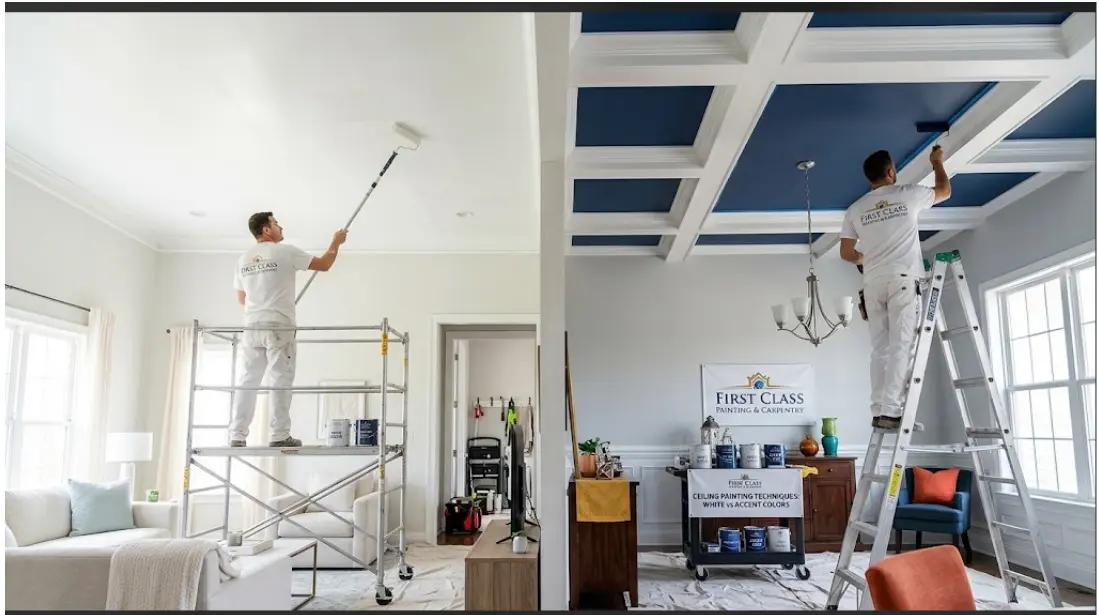
Standing in a room deciding what to do with the ceiling is a moment most homeowners rush through, then regret. A ceiling is roughly a fifth of the visible surface area in most rooms, yet it’s usually the last thing anyone thinks about until the paint is already on the walls. Understanding the right ceiling painting techniques for white ceilings versus bold accent colors can completely change how a room feels, and getting the technique wrong is one of the fastest ways to end up with a patchy, uneven finish overhead.
At First Class Painting and Carpentry, we’ve been refining ceiling painting techniques across DMV homes since 1988, and the difference between a ceiling that looks crisp and one that looks amateurish almost always comes down to preparation and product choice, not just the color decision itself.
Why Ceiling Painting Techniques Differ From Wall Painting
Ceilings behave differently than walls under paint, for a few reasons that matter regardless of which color direction you choose:
- Light hits them at an extreme angle, which means flat imperfections in application, like roller lap marks or uneven coverage, show up far more obviously than they would on a vertical wall.
- Ceilings absorb more visible glare from overhead lighting and windows, making flat or matte sheens the standard choice, since anything glossier reflects light unevenly and highlights every roller stroke.
- Cutting in around trim and light fixtures requires more precision overhead, since mistakes are harder to correct once the surrounding wall or trim color is already in place.
These differences are exactly why ceiling painting techniques deserve their own approach rather than treating the ceiling as an afterthought to a wall repaint.
Classic White Ceiling Techniques
The traditional white ceiling remains the most common choice, and for good reason: it reflects light effectively, makes rooms feel taller and more open, and pairs with virtually any wall color without a second thought.
Getting a flawless white ceiling comes down to:
- Choosing a true flat or ceiling-specific paint. These formulations are designed to minimize glare and hide minor surface imperfections better than standard wall paint.
- Cutting in a clean line at the wall-ceiling junction first, using a steady hand or a guide, since this line is one of the most visible details in the entire room.
- Rolling in one consistent direction, typically parallel to the room’s main light source, to avoid visible lap marks under raking light.
- Applying two full coats, even over an existing white ceiling, since a single coat often leaves faint roller texture or patchy coverage that becomes obvious once dry.
A well-executed white ceiling technique is subtle by design. The goal is a surface so even that the eye doesn’t register it as painted at all, just clean and bright.
Accent Ceiling Techniques
Painting a ceiling in a bold or contrasting color is one of the more dramatic design moves available in a home, often called a “fifth wall” treatment. Done well, it adds depth, coziness, or drama depending on the color chosen. Done without the right ceiling painting techniques, it can look unintentional or amateurish fast.
Accent ceilings require a few adjustments to standard technique:
- Sheen selection matters more. A slight eggshell or matte-with-sheen finish can add richness to a dark accent color without creating the glare issues of higher-gloss paints.
- Cut lines need to be sharper. Since the ceiling color contrasts with the walls rather than blending in, any wavering along the trim line is immediately visible.
- Lighting changes how the color reads. A deep navy or charcoal ceiling can look dramatically different under warm versus cool light bulbs, so testing the color under your room’s actual lighting is essential before committing to the full ceiling.
- Trim and crown molding often need a coordinating update. An accent ceiling paired with unchanged white trim can look unfinished, while a deliberate pairing, like painting crown molding to match either the wall or ceiling, ties the whole room together.
Choosing Between the Two: What Actually Drives the Decision
The right ceiling painting technique and color direction depend less on trend and more on the room itself:
- Ceiling height: Lower ceilings generally benefit from white or a very light tone, which keeps the room feeling open, while taller ceilings can support a bolder accent color without feeling closed in.
- Room function: Formal dining rooms, primary bedrooms, and libraries tend to be the most common places for accent ceilings, since they’re spaces where a cozier, more dramatic mood works in the room’s favor.
- Natural light: Rooms with abundant natural light can handle darker accent ceilings without feeling dim, while low-light rooms often do better sticking with classic white ceiling techniques to keep the space bright.
- Architectural detail: Rooms with crown molding, tray ceilings, or other architectural features often look their best when an accent color is used to highlight that detail rather than fighting against it.
Common Mistakes With Either Approach
Regardless of which ceiling painting technique you choose, a few mistakes show up again and again:
- Skipping proper prep, including patching nail pops, cleaning surface dust, and priming stains, which leads to visible flaws once paint is applied
- Using wall paint on the ceiling instead of a ceiling-formulated product, resulting in more visible roller marks and inconsistent sheen
- Rushing dry time between coats, which can cause the second coat to drag and create streaking
- Inconsistent lighting checks, especially for accent colors, where a color that looks great in daylight can read completely differently under evening lighting
Frequently Asked Questions
Does a ceiling really need two coats of paint?
In almost every case, yes. A single coat, even with quality paint, often leaves subtle unevenness that becomes visible once the paint dries and light hits it at an angle. Two coats give a flat, consistent finish that one coat rarely achieves.
What sheen is best for an accent ceiling?
Flat to matte finishes remain the most forgiving for ceilings, including accent colors, since higher sheens tend to highlight roller marks and application imperfections under overhead lighting. A matte finish with slight depth can still make a bold color feel rich without the glare issues of eggshell or satin overhead.
Should trim match the ceiling or the walls?
There’s no single right answer, but a common approach is matching trim to whichever surface, wall or ceiling, is the lighter of the two, which helps the room feel grounded rather than visually split in half.
Can I paint just one ceiling in my home a different color, or does it need to match throughout?
A single accent ceiling in one standout room, like a dining room or primary bedroom, is a common and effective approach. It doesn’t need to extend throughout the home, though keeping white ceilings consistent in adjoining open-concept spaces usually looks more cohesive.
Get a Flawless Ceiling, Whichever Direction You Choose
Whether you’re keeping things classic with a crisp white ceiling or making a statement with a bold accent color, the right ceiling painting techniques make the difference between a professional-looking result and a finish that shows every flaw under the light. Our team brings the same level of precision to ceilings that we bring to every interior painting project, ensuring clean lines, even coverage, and a finish that actually holds up.
As trusted Painters in McLean VA and throughout the surrounding DMV area, First Class Painting and Carpentry has been perfecting ceiling painting techniques since 1988. Contact us today for a free consultation, and let’s get your ceiling looking exactly the way you pictured it.