
Trim and Baseboard Painting: Oil Based vs Water Based Enamels
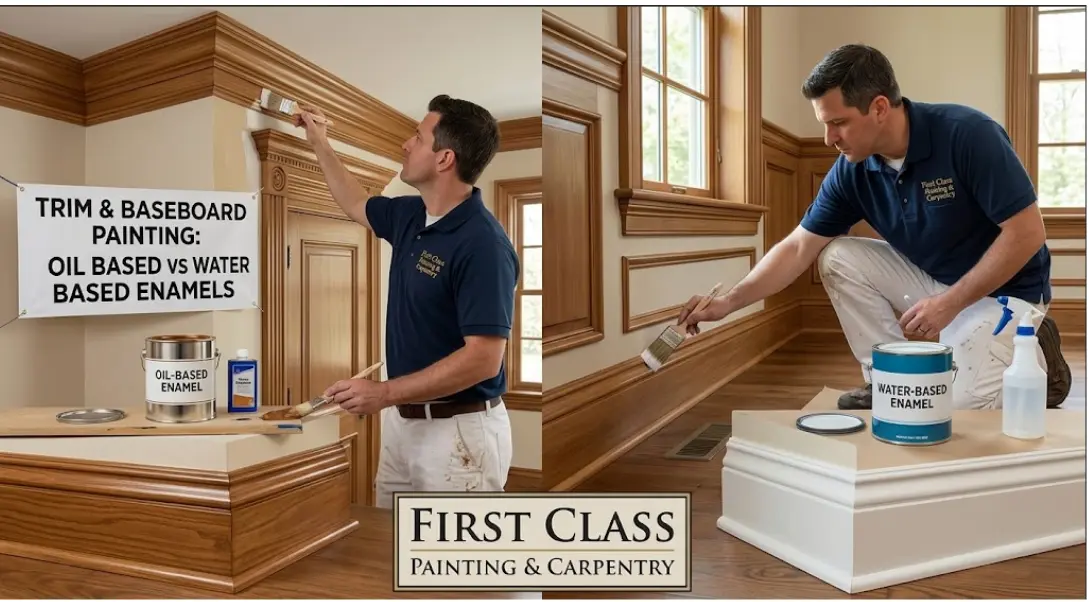
Trim and baseboards take more physical abuse than almost any other painted surface in a home: shoes, vacuum cleaners, furniture, pets, and kids all make regular contact at exactly the height where trim lives. That’s why the enamel you choose matters more here than almost anywhere else in the house. Trim baseboard painting oil vs water enamel is one of the most common questions we hear from homeowners planning an interior refresh, and the right answer depends on more than just which one dries faster.
At First Class Painting and Carpentry, we’ve applied both oil and water based enamels across countless DMV homes since 1988, and each has a real place depending on what a homeowner actually needs from their trim.
What Makes Enamel Different From Standard Wall Paint
Before comparing oil versus water based options, it helps to understand why enamel exists as its own category. Enamel paints are formulated to cure into a harder, smoother, more durable film than standard wall paint, which is exactly what high-contact surfaces like trim, baseboards, doors, and cabinetry need. Both oil and water based enamels are built for this kind of durability, but they get there in different ways, and that difference shows up in how they apply, cure, and hold up over time.
Oil Based Enamel: The Traditional Standard
Oil based enamel has been the go-to choice for trim and baseboards for generations, and it’s still highly regarded for a few specific strengths:
- Exceptional leveling. Oil based enamel self-levels as it dries, which means brush and roller marks largely disappear, resulting in an ultra-smooth, glass-like finish that’s hard to match.
- Superior hardness once fully cured. Oil based enamel cures into an extremely hard film, which historically made it the top choice for surfaces that take heavy daily wear.
- Slower dry time. This is a double-edged quality; it gives painters more working time to achieve a flawless finish, but it also means longer waits between coats and a longer window before the surface can handle normal use.
The trade-offs are real, though. Oil based enamel tends to yellow over time, especially in rooms with limited natural light, and it requires mineral spirits for cleanup rather than soap and water. It also carries stronger fumes during application and cure, which matters in occupied homes.
Water Based Enamel: The Modern Standard
Water based (acrylic or urethane-modified) enamels have improved dramatically over the past decade and have become the default choice for most professional trim baseboard painting today:
- Faster dry and cure times, allowing rooms to be back in use sooner and reducing the overall project timeline.
- Better color retention over time, since water based formulas resist yellowing far better than oil based options, keeping whites looking true for years.
- Easier cleanup and lower odor, using soap and water rather than solvents, which makes them a more practical choice for occupied homes and households with young children or pets.
- Improved durability, with modern urethane-modified acrylics closing much of the hardness gap that used to clearly favor oil based products.
The main trade-off with water based enamel is leveling. Even high-quality water based formulas require more careful application technique to avoid visible brush or roller marks compared to oil’s natural self-leveling properties, though the gap has narrowed significantly with newer product lines.
Side-by-Side Comparison
| Oil Based Enamel | Water Based Enamel | |
| Finish smoothness | Exceptional, self-leveling | Very good with proper technique |
| Yellowing over time | Noticeable, especially in low light | Minimal |
| Dry/cure time | Slower | Faster |
| Odor and cleanup | Strong odor, solvent cleanup | Low odor, soap and water |
| Hardness/durability | Excellent once cured | Very good, improving with newer formulas |
| Best for | Formal spaces prioritizing an ultra-smooth finish | Most modern homes, especially occupied spaces |
Which Should You Choose for Your Trim and Baseboards?
For most DMV homeowners today, water based enamel is the practical choice for trim baseboard painting, particularly in occupied homes where odor, dry time, and long-term color retention matter. It also holds up well against the daily wear baseboards experience, without the yellowing that can make oil based white trim look dated within a few years.
Oil based enamel still has a place in specific situations, particularly for homeowners prioritizing the absolute smoothest possible finish on statement trim, formal millwork, or doors, and who can accommodate the longer dry time and stronger odor during the project.
A Few Application Notes That Matter Either Way
Regardless of which enamel you choose, a few factors determine how well trim baseboard painting actually holds up:
- Proper surface prep, including cleaning, light sanding, and priming over any existing gloss or stain, matters more than the enamel choice itself for long-term adhesion.
- Bonding primer is essential when painting over previously oil-based trim with a water based product, since skipping this step is one of the most common causes of peeling.
- Multiple thin coats outperform one thick coat, regardless of enamel type, producing a more even, durable finish with fewer drips or sags.
Frequently Asked Questions
Can I paint water based enamel over old oil based trim?
Yes, but only with a proper bonding primer first. Skipping this step is one of the most common reasons water based paint fails to adhere to existing oil based trim, leading to peeling or chipping within months.
Does oil based enamel really yellow that much?
Over several years, especially in rooms with limited natural light, oil based whites can develop a noticeably warm or cream tint compared to their original color. Water based enamels are formulated specifically to resist this shift.
Which enamel is more durable for baseboards with pets and kids?
Modern water based urethane-modified enamels hold up very well to daily wear, scuffs, and cleaning, and for most households the odor and dry-time advantages make them the more practical everyday choice over oil based options.
Do I need a different enamel for doors versus baseboards?
Not necessarily. Many homeowners use the same enamel across doors, trim, and baseboards for a consistent sheen and finish throughout the home, though doors sometimes benefit from oil based enamel’s extra-smooth leveling if a showroom-quality finish is the priority.
Get the Right Finish for Your Trim
Choosing between oil and water based enamel isn’t just a preference, it affects how your trim and baseboards look and perform for years to come. Our team can walk you through the right choice for your home as part of any interior painting project, factoring in your existing trim, household needs, and the finish you’re after.
As trusted Painters in Rockville MD and throughout the surrounding DMV area, First Class Painting and Carpentry has been getting trim and baseboard finishes right since 1988. Contact us today for a free consultation on your next project.
Suggested Filename: oil-based-vs-water-based-enamel-trim-painting.jpg
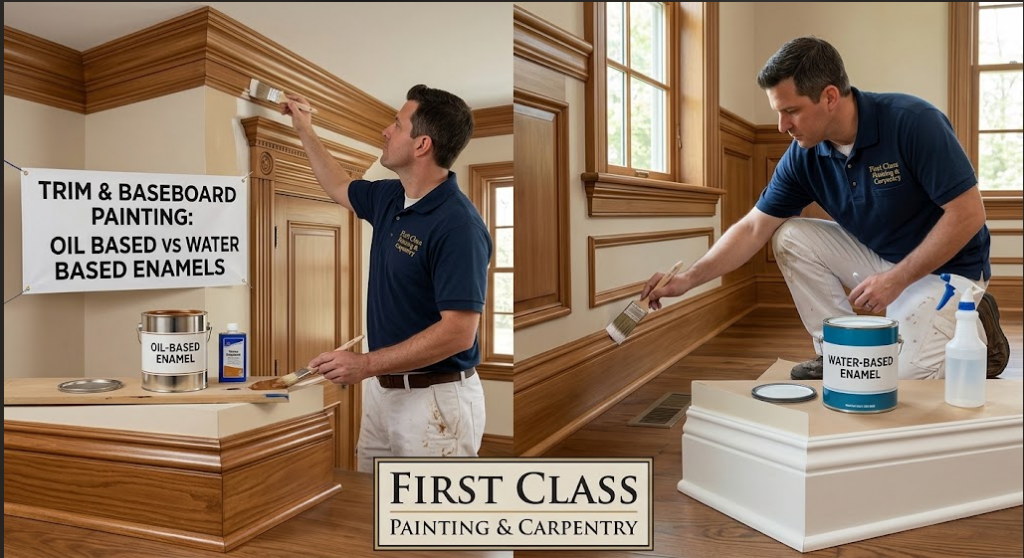
Alternative Text (Alt Text): A professional painter from First Class Painting & Carpentry demonstrating how to apply oil-based enamel on wooden crown molding and water-based enamel on baseboards in a home interior setting.
Image Title Tag: Oil-Based vs. Water-Based Enamel Paint for Trim | First Class Painting & Carpentry
Meta Description: Are you choosing between oil-based and water-based enamel for your trim and baseboards? First Class Painting & Carpentry shows the application differences and professional results of both paint types on interior woodwork.
Caption: A visual comparison of professional trim and baseboard painting techniques, featuring oil-based enamel application on traditional wood molding and water-based enamel application on modern baseboards by the First Class Painting & Carpentry team.